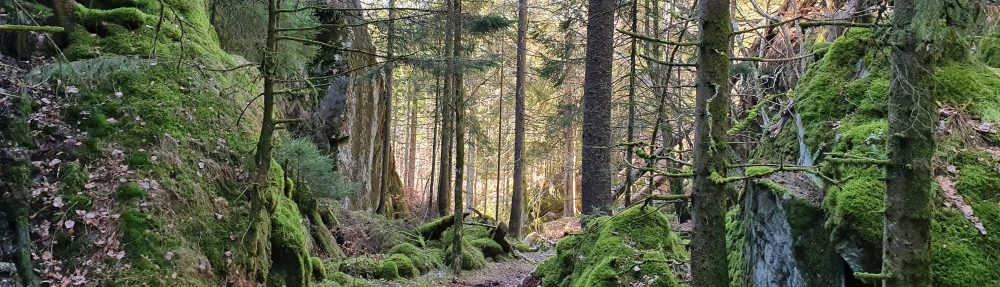
Kvarteren vid Trollspisberget och runt Liseberg

Episodes 201 to 204 cover a suite of architectural styles from the early 1910s to the early 2020s, with a bit of natural design thrown in for good measure.

Episode 201: kv Entitan, kv Koltrasten, kv Blåmesen, kv Munkeboda, Trollspisen

District: Johanneberg (parts formerly in Lorensberg)

Photo date: 13 August 2021

The block called Munkeboda was originally part of district Lorensberg but got chucked into Johanneberg at the latest administrative reshuffle. Based on architecture and population, it really should still be part of Lorensberg, though, with a consulate, a posh villa by Johan Jarlén, now a school, and yet another lodge. It also has a brand new house designed by the Inobi bureau and put up during the last year. For the other blocks in this episode I refer to a general description of the area, page 126ff.

My grandmother wrote in her memoirs how they used to climb up the hill behind their house and in a crevice light a fire to make coffee. This same crevice gave the name to the hill and it still exists today! For the 1923 exhibition a path was cleared to the hill, for those boring persons who didn’t want to travel by funicular.

Some ten years ago I made a rock survey for a new zoning plan that wants to excavate half the Troll Stove hill and put up two tall houses in the new pit. But that would entail 30 metres high rock cuttings and it is placed right on top of sewers which would give inescapable ”aromas” in the new, expensive condos… The houses have yet to be built. The hill consists of mainly gabbro with various grain sizes. Very pretty.

Episode 202: kv Skokloster

District: Johanneberg (formerly Lorensberg)

Photo date: 13 August 2021

Here is another block that is properly part of Lorensberg. The zones, districts and sub-districts are really confused here… Maybe it’s the ghosts of those who were executed here that play havoc with the minds of city officials? The ghosts didn’t seem to bother my grandmother and her ancestors who lived here for a century. But for the 1923 exhibition, a cable-car was drawn right over this block, which was yet to be built, and over their garden – and sometimes the gondolas stopped and the passengers had to be rescued. So she said.

Episode 203: kv Getebergsäng – inside Liseberg

District: Heden

Photo date: 16 August 2021

Liseberg was one of the many small farms that dotted the area until 1923 or thereabouts. A few of the farm buildings still exist but the gardens have long gone – except maybe here, if you count the funfair as a garden. In her memoirs, my grandmother writes how she visited the manor house once, before the funfair had transformed the idyllic park. She was visiting a school friend who was staying with her relative, the architect Eugen Thorburn.

The 1923 Anniversary Exhibition was a temporary affair, almost ephemeral. And it was a riot of design! Sigfrid Ericson and Arvid Bjerke were the main architects and they created something fairytale-like. All photos from the time are black-and-white but written memories all mention how colourful it was. It was a very ambitious undertaking, with a historical section on the Johanneberg hill and a modern technical section at what became Svenska Mässan. And annexed to that part was the Liseberg funfair, the only part of the venture that wasn’t a spectacular financial loss. So it was decided to keep it and it has generated profit ever since.

Structures at Liseberg come and go, either in planned redevelopment or in sudden fires. The Congress Hall went up in flames in 1973, and the brand new adventure lido that was meant to save the entire tourism sector in Gothenburg melted in a horrid fire a month ago. Wikipedia says the two entrance towers were designed by Axel Jonsson and put up in 1940, as a nod to the two towers from the original exhibition. The pink colour permeating the whole park is said to be the original colour from the exhibition.

Episode 204: kv Getebergsäng (outside Liseberg), kv Sandmusslan, kv Pilgrimsmusslan, kv Immeln, kv Spindeln

District: Heden, Krokslätt (parts formerly Bö and Skår)

Photo date: 16 August 2021

Some 30 years ago I had a job just south of Liseberg and used to walk, run and tram along Södra Vägen almost daily. The big wooden villas and small landshövdingehus that my grandmother knew from her childhood were still there – but just a few years later they had to go to make way for the science centre (designed by Gert Wingårdh) and the award-winning culture museum (designed by Cécile Brisac and Edgar Gonzalez). And for the last six years also for Västlänken. Only the modernist house next to the southern entrance to Liseberg remains, for now…

East of the Mölndal creek the funfair has taken over the city block called Pilgrimsmusslan, where there used to be factories and before that very cheap housing for industrial workers. One part of a larger estate was set off as a sports field and named Balders Hage. This is where the ÖIS football club was started. The factories produced everything from sweets to yarn to engines and some of them were closed only 30 years ago. The Wingårdh bureau also designed the Grand Curiosa Hotel and the lido that burned down earlier this year.

Kvarteren Gälakvist, Skaraborg, Läckö, Koberg, Gräfsnäs, Årnäs

Episodes 181 to 185 ramble around the Lorensberg villa-town and get all arty down by Poseidon, where Lexxians once gathered…

Episode 181: kv Gälakvist

District: Lorensberg

Photo date: 20 June and 25 September 2021

When my mother studied art history in the 1980s, the department was located in one of these houses, probably Bjerke’s studio, my memory is hazy. I do remember the premises felt a bit cramped, though.

Episode 182: kv Skaraborg

District: Lorensberg

Photo date: 20 June 2021

Albert Lilienberg planned the Lorensberg villa-town around a tiny square, Högåsplatsen, and made full use of the terrain contours for laying out the streets and plots. Earlier planning ideals would have laid out as square a grid as possible and instead made full use of dynamite to level the terrain – as is the custom today as well.

Högåsplatsen has a very light and airy feeling to it, also slightly English. Around it are all these lovely century-old houses: the villa where Ågren lived for 40 years before bequeathing it to the university; the only remaining wooden villa, typical of the time; the Mellgren villa that was taken over by medicos; and the rather stupendous Broström house with its nautical associations.

Episode 183: kv Läckö

District: Lorensberg

Photo date: 20 June 2021

The houses in Läckö are a few years older than Gälakvist and Skaraborg, and the shift in styles is very noticeable. National Romanticism gives way to 1920s classicism and Modernism is just beginning to be felt. We add a couple of names to our list of architects: Karl Severin Hansson and Karl Samuelsson.

Two recent houses have been added too, where the architects’ usual crede that new houses should only and totally reflect the dominant contemporary style has been vetoed, either by the city architect (unlikely, that office is utterly insipid) or by the powerful interests operating on this hill (more likely, Gothenburg isn’t nicknamed Graftenburg for nothing). The two new houses are at Bengt Lidnersgatan 7 and Ekmansgatan 5. The latter was designed by Albert Svensson in what must be called a Neo-Neo-Classical style, and can be seen in Intermission IIIb.

One of the big names on the hill was Ekman, a once very influential family of traders and magnates on a par with Dickson and Wijk. Their flame has somewhat gone out these days, though. But the house that bears their name here is quite spectacular, ushering in the 1920s style that would soon be seen in all the landshövdingehus districts springing up around the outskirts of town.

Episode 184: kv Koberg

District: Vasastaden (formerly Lorensberg)

Photo date: 20 June 2021

In Koberg we add another young architect, Ebbe Crone. The houses in this block are variously offices and housing associations. Most houses in the villa-town were residential when built and then turned into offices in the 1950s. Recently, quite a few of the offices have been converted back to residential use. But not the Builders’ Association, which is still very active in its offices in Villa Hertz.

Episode 185: kv Gräfsnäs, kv Årnäs

District: Lorensberg

Photo date: 6 June 2021

Finally, here we are at one of the major landmarks in Gothenburg, the Art Museum. The top of Kungsportsavenyen had long been left undeveloped because the city planners recognized that it had to be rather spectacular and not a whim or half-measure that would make everyone angry over the years. So it wasn’t until the 300th anniversary exhibition that ideas and plans finally gelled: they simply had to produce something for that event! And thus was borne the Gothenburg Art Museum, which together with the Art Hall next to it are the only structures in the area left of the exhibition. (My grandmother tells in her memoirs how she used to walk across the building site to get to school, and one day dropped a bottle of tadpoles in the excavated rubble…)

The museum contains the original Fürstenberg collection from the late 1800s, which is very typical of the time with animals and naked young women, several Dutch masters including a scary painting of the severed head of St John the Baptist, and modern sections including temporary exhibition areas in the extension designed by Rune Falk and the White Bureau. Both the Art Museum and the Art Hall were designed by Ericson and Bjerke, who together with Swensson and Torulf were responsible for the overall design of the anniversary exhibition.

Surrounding Götaplatsen were temporary strucures that were dismantled after the exhibition. It took a decade or more before the area was completed, with the iconic (yes, I use that worn word very consciously) statue of Poseidon, the City Theatre and the Concert Hall. Classicism and finest Modernism surround the open space, where political manifestations happen, music gigs take place and sports stars are given heroes’ welcomes. And Lexxians gather to sing the Brunnen-G song, at least we did a quarter of a century ago…

Kvarteren Malmöhus, Oppensten, Borgeby, Örbyhus samt Lorensbergsparken

Episodes 171 to 175 tour the tail-end of Neo-Renaissance and celebrate early and late Modernism.

Episode 171: kv Malmöhus

District: Vasastaden (formerly Lorensberg)

Photo date: 30 May 2021

Wallenstam recently changed its logo from the ant carrying a letter m or W, to a stylised ant drawn with a single looping line. Maybe the ant carrying a pine needle, as seen on Engelbrektsgatan 28, is the original logo from the 1950s?

Trying to find some information about the modern houses in the middle of the block (a real estate agent says they were built in 1943), I came across the current zoning plan for the area. It is dated 1867!

Episode 172: kv Oppensten

District: Vasastaden (formerly Lorensberg)

Photo date: 29 May 2021

Wilhelm Röhss was one of the magnates in the 19th century who donated parts of their estates to the city, to be used for the public good. Since the sums were substantial, the foundations are still operating today. The Röhss monies were used to build this museum to which my mother would drag me quite often (my favourite museum was the ethnographic one, with American Indians). When the museum was built, it was in the then-fashionable National Romanticist style. The two extensions were also designed in then-current fashions: Melchior Wernstedt’s 1930s early-Modernism and the late-Modernist one from circa 1960, by Sven Brolid and Jan Wallinder.

At the other end of the block is the Academy of Craft and Design, or some better equivalent to its many names: Slöjdförenings skola, Konstindustriskolan, Högskolan för design och konsthantverk. Hans Hedlund’s original building has been added to by Sigfrid Ericson in 1915 (the penthouse) and the White design bureau in 1992 (filling up the former courtyard). Today, it is part of the university and offers education in all the fine arts.

Episode 173: kv Borgeby

District: Vasastaden (formerly Lorensberg)

Photo date: 30 May 2021

Here is the original Valand that the current Academy of Fine Arts takes its name from. It was quite an important institution (at least locally), producing several fine artists over the years. The school moved to new premises in 1925 and has led a wandering existence since then. The Par Bricole lodge took over the house at that time and are still very much going strong.

The block is built on land that belonged to the old farm Kristinelund. Nothing remains of it but the street name, and apart from Valand nothing remains of the first stone houses either. At the south end of the block is a beautiful Modernist house designed by Nils Olsson in the late 1930s. The middle of the block was razed in the late 1950s and two new houses designed by Helge Zimdal were put up along Avenyn. Some ten years ago they were given a makeover, and the western side of the block was completely rebuilt from designs by Anna Sunnerö at the Wingårdh bureau. Gert Wingårdh is the current mega-star in Swedish architecture.

Episode 174: kv Örbyhus

District: Vasastaden (formerly Lorensberg)

Photo date: 29 May 2021

In this block, too, the back side along Teatergatan has been redeveloped from designs by Jacek Zalecki at Wingårdhs. Apparently, the previous 1930s and 1960s houses were ”shoddy” and ”disgusting” – the very same words used for the districts that were lamentedly razed in the 1960s and 70s. Plus ça change…

Originally, the whole block was built in intricate Neo-Renaissance in the late 1890s, but only the end houses have been left standing. Of the three middle houses along Avenyn, the northern one was built in 1935 and designed by Nils Olsson in a calm and clean Modernist style. The other two houses were designed by Lund & Valentin in late-Modernist style and built in 1961. As in Borgeby, they were given a makeover by Wingårdhs some ten years ago.

Episode 175: Lorensbergsparken

District: Lorensberg

Photo date: 5 June 2021

When I was a kid, my parents used to go dancing at a place called Sophus, named after the last and famous restaurateur at the Lorensberg entertainment complex, much written about by Fredberg. Almost nothing remains of it today, other than the Lorensberg Theatre and the name of the whole district. And a small play area with circus horses…

The big hotel was designed by Nils Einar Eriksson in 1948, to house visiting industrialists. It still looks much like it did when it opened but the city library has been given a facelift designed by the Erséus bureau. The theatre was designed by Karl M Bengtsson but when it was turned into a cinema in 1934 it was redesigned by R O Swensson and H Widlund. In 1987 it was turned back into a theatre which it still is. For now.

Kvarteren Beryllen, Smaragden, Diamanten, Malakiten and Exercisheden

Episodes 119 to 122 survey the north part of district Heden, with private and public building styles spanning a century and more.

Episode 119: kv Beryllen

District: Heden

Photo date: 19 September 2020

During Gothenburg’s 400th anniversary celebrations last year, one event was the fact that the ”utility-historical collections” in Elyseum, Hans Hedlund’s Art Nouveau fortress of electricity, were open at a time when others than OPAs could visit. I jumped at the opportunity – and it was fabulous! Gas works, electricity production, district heating, cables and pipes, and a recreation of the first exhibition of electrical gadgets that you might use as a pioneering electricity consumer. Wow. If you want to go, the opening hours are 1000-1400 on Wednesdays. Or book a private showing.

Episode 120: kv Smaragden

District: Heden

Photo date: 19 September 2020

The architect Johan August Westerberg designed the splendid tenenment buildings for employees at the state railroads, while the 1892 house with the tower was designed by K Johansson. And you can read all about the 1891 industrial exhibition in CRA Fredberg’s third volume of stories about Gothenburg of yore.

Episode 121: kv Diamanten

District: Heden

Photo date: 6 September 2020

Oscar Dickson’s ”palace” at the west end of The Diamond was designed by William Allen Boulnois and built by local building firm P J Rapp, with imported English workers. Boulnois also designed Villa Överås in Örgryte, which we might visit in several years’ time if I continue with this architectural hobby.

It’s rather unusual to have two churches in one block. The Methodist church was designed by Karl Magnus Bengtsson, in a mixed Swedish-English 1920s style. And the 20 years older house it was added onto was designed by Oswald Westerberg, son of Johan August. The Roman Catholic church was built ten years later, from designs by Carl Rosell. It was adequate at the time but today it is always packed full on Sundays, many attendants have to stand throughout the 90-minute service.

Parkgatan 6 was built at the same time as church and designed by Gotthard Gillermo. The G D Kennedy house, by Gotthard Åhlander, is one of the last examples of charitable housing made possible by donations to the city by wealthy merchants and financiers. For a hundred years, that was a common and commendable practice, to share wealth and be remembered. From the 1930s, Sweden became a socialist state with the aim of lowering class barriers and sharing wealth, the so-called People’s Home, and donations were no longer needed to aid poor people. I guess it is time to take up that old practice again now.

Episode 122: kv Malakiten and Exercisheden

District: Heden

Photo date: 19 September and 11 October 2020

CRA Fredberg writes enthusiastically about the so-called Rifle Movement that flourished in Gothenburg for a few years in the 1860s. They marched about, held gun competitions, and built this sports hut at the edge of the military exercise field, Heden. The movement quickly faded into ancient history, but the house endures, with sports activities almost every week. The architect was Frans Jacob Heilborn.

The Sports House where the farm Katrinetorp (or the Flea Pit as it was apparently called) once stood, was built from scratch for the 1923 Anniversary Exhibition, from designs by the exhibition’s official architect Arvid Fuhre. The Exhibition was located not just at the main area around Korsvägen: here in Heden was the farming section, for instance, and over on Hisingen was ILUG, the first international airshow after the Great War, at a float-plane harbour and airfiled opened in 1923 and only closed when Landvetter Airport was built 50 years later.

Liseberg acquired the hotel at the south end of Heden in 1981, and about that time the bus stop house was built too. There have always been unrealised plans to fill Heden with more houses, preferably tightly clustering highrises which is de rigueur today. But it is a very useful open space, accommodating healthy athletics, events like the horse championships a few years back, and circuses!

Kvarteren Örnen, Svanen, Geten, Bleket, Gumsen, Lammet

Episodes 107 to 110 explore the industrial and social heritage in the middle part of Gårda. Most of it has been redeveloped, not once but twice – or more.

Episode 107: kv Örnen, kv Svanen

District: Gårda

Photo date: 14 March 2021

Almost all of the old industrial estate Gårda was demolished in the 1960s, to make way for the new motorway that bisects the eastern part of Gothenburg. New houses were erected in the 1980s, as close to the motorway as was deemed safe. Some of the earliest skyscrapers in Gothenburg were built here at that time too, now long since over-shadowed.

The middle part of district Gårda has been turned into an American-type commercial district with skyscraper offices. All this on marine and glacial clays next to a small river! The newest skyscrapers were finished in 2023 and are documented in Intermission part III.

Episode 108: kv Geten, kv Bleket

District: Gårda

Photo date: 14 March 2021

Just a handful of old houses in Gårda were preserved, listed or turned into a museum. Once the corona pandemic was over and forgotten, other museums opened up too, but the Belt Factory is still very much worth a visit! It’s full of old looms and stuff, and they sell some of their products too. Very useful when making tolkienist outfits.

Episode 109: kv Gumsen

District: Gårda

Photo date: 14 March 2021

The old Gårda was not just an industrial estate but also contained many tenement houses for its workers and their families. The school here was closed in 1977 – some ten years after the motorway right next to it had been opened! How could they let children roam there for so long? Anyway, the building seems not to have much of a future.

The parking garage is one of at least three from the post-modernist 1980s that I’ve seen so far on my ramblings. This one was decorated by Klas-Göran Tinbäck who appararently is still alive, at the time of writing (2023).

The firm Tomten not only manufactured detergents etc, but for some reason also sparklers. They are still known as Tomtebloss in Swedish and are branded enthuiastically at Christmas.

Episode 110: kv Lammet

District: Gårda

Photo date: 14 March 2021

Many of the factories in Gårda were built along the Mölndal Creek or River. It was used as a canal for transporting goods and also as a ditch for effluvia. Further up-river were several businesses that have left a very unpleasant chemical legacy in the river bottom. Dredging is quite hazardous but necessary, as the lower part of the river is very flood prone.

The Wool Yarn Factory has its own page at the Higab site.

Östra Nordstaden, längs Älvstranden, broar längs Hamnkanalen

Episodes 22 to 24 mostly contain modern buildings and structures. The city was subject to ”total sanitation” in the 1960s and 1970s, when the politicians and civil servants decreed that old was bad, everything older than 30 years shold be razed and modern concrete boxes be put up instead. The city of my childhood consisted in large parts of demolition sites.

Episode 22: Östra Nordstaden

District: Östra Nordstaden

Photo date: 5 and 18 April 2020

In 1972 this business and shopping precinct was opened. The building work had destroyed every old house except a couple in the extreme southeast corner, and dug up all the archaological remains like the old bastion and sections of moat that once stood here. All gone.

Until 1938, one of the run-down streets held Gothenburg’s only Catholic church, St Joseph. That year, the new church next to Heden was opened. The rest of the area was mostly given over to warehouses, after the emigrant rush was over. Of the ten blocks named in 1923, only five remain today: Hövågen, Klädpressaren, Köpmannen, Drottningtorget and Kronobageriet.

The city before the mid-1960s looks completely different from the city of the mid-noughties. And that city looks completely different from the one today, because of all the skyscrapers that have mushroomed in the last couple of years.

Episode 23: Lilla Bommen, Nya Operan, kv Magasinet, kv Packhuset

District: Östra and Västra Nordstaden

Photo date: 18 April and 27 June 2020

The water-front has been completely transformed several times. In the 1980s, the old warehouses were torn down and our first skyscraper erected instead. Compared to the ones sprouting today, it is quite small… Ralph Erskine designed it for Skanska. Due to its colours, and because it once held offices for the see (”stift”) it was quickly dubbed Läppstiftet (”lipstick”).

Some ten years later, a new opera house was built on the ruins of the old prison, itself built on the ruins of the bastion St Erik. The public could contribute funding and in return got a token signed by the city council at the time. My grandmother sent in some money in the name of her family’s old shop and we still have that piece of paper.

Further along are some remnants of the once bustling harbour. A maritime museum still lines the quay, which is in need of maintenance and climate change security adjustments. And of course, the ”new” customs house has ironically been turned into a casino. (The newest customs office moved to Östra Nordstaden when it was built, along with all the banks.)

Episode 24: broar längs Stora Hamnkanalen

District: Västra and Östra Nordstaden

Photo date: 17 November 2019 to 7 July 2020

The city was originally laid out with the help of Dutch engineers, which meant canals and bridges. All the bridges have been rebuilt at least once and all but one of the canals have been filled in. Before the Lock was built in 1873, there was also a water-mill where the Paupers’ Creek enters the canal system, just inside the old city wall. Until a few years ago, I had no idea about this.

Kvarteren Ostindiska Kompaniet, Lilla Berget, Traktören, Rådhuset

Episodes 16 to 21 deal with the splendid trading houses and official buildings along the Main Canal. In the old days, the view and general aura of the area were somewhat marred by the cheap bazaars under the church and the Fish Raft floating in the canal below the City Hall. Today the nuisances have shifted to combustion engines and enterprising seagulls.

Episode 16: kv Ostindiska Kompaniet

District: Västra Nordstaden

Photo date: 5 April 2020

The Swedish East India Company was first set up in 1731, to fetch tea, china and silk from the Far East without paying Dutch and English middlemen. Some ten years later the company directors decided to build a big warehouse for their luxury goods, and this block is it.

A hundred years later, much of the building became the City Museum. The museum was small enough to hold everything from weird animals to art. Later, the collections expanded and in 1923, the year of the big 300th anniversary exhibition, the arts and animals moved to separate museum buildings.

When I was a kid, I was fascinated by Native Americans and the museum had a fabulous ethnographic section including artifacts from both North and South America. I especially remember the top floor with the big display boxes with models dressed in fantastic South American feather decorations. They were soon taken down, though, and now I wonder if the memory is real or a fantastic dream recollection like Randolph Carter’s city

Episode 17: kv Ostindiska Kompaniet inuti

District: Västra Nordstaden

Photo date: 27 June 2020

For a small fee you can visit the museum and look at the inner courtyard. In the beginning it was an open yard with cobbles, where merchants could come and get their luxury goods. In the mid-1800s it was turned into a garden for the museum. And in 1890 it was closed in, when the Wilson Wing along the back of the block was added. The wing was designed by Hans Hedlund and the paintings were made by Yngve Rasmussen, who also decorated the Gnome House in Vasastaden.

The inside of the house is well-decorated too. But in this project I limit myself to the outside of houses and only those inside areas that are open to the public. I made an exception in this case because it is a funny little place.

Episode 18: kv Lilla Berget, kv Traktören

District: Västra Nordstaden

Photo date: 7 March and 5 April 2020

”Gothenburg’s Trade and Shipping Newspaper” started in 1832 and soon became the major newspaper in town. In the latter half of the 1800s it was dominated by S A Hedlund who was one of the biggest names in Gothenburg history, period. He and his nephew secured the services of one of Sweden’s best-loved poets, Viktor Rydberg. And during WWII, the paper was run by Torgny Segerstedt who was an active anti-Nazi. A grand legacy — and in the 1970s the paper went bankrupt and is now just a memory.

One of the reasons it died was the other major newspaper in town, Göteborgs-Posten, which had a less liberal and more conservative focus. In the 1930s, when its new production house next to the railway station was built, it had 500,000 readers, in the 1980s 600,000. The digital era put paid to their activities too but the ”paper” still exists, at least.

The house in this block was built in the late 1870s and housed offices and printing presses. Before that, the site consisted of a Small Hill with a nasty slum. Right next to the grand residences and official buildings!

Episode 19: kv Rådhuset — Sahlgrenska huset

District: Västra Nordstaden

Photo date: 7 March 2020

The block called City Hall consists of three separate houses, each richly decorated enough to warrant splitting the block into three episodes.

In 1717 the very wealthy and influential merchant Jacob Sahlgren bought the stone house that stood on this property, until 1746 when it was destroyed in one of the savage fires that used to sweep through the crowded wooden city. His widow Birgitta had this splendid new house built for her son Niclas Sahlgren. The upper floors were residential while the lower floors and cellars held offices and magazines for the trade.

In 1873 another very wealthy trader bought the house and he and his partner added their initials to the remodelled portal: CC for Christopher Carlander and JJ for Johannes Johansson. The city took over the building in 1905 and various services have had their offices here since.

Episode 20: kv Rådhuset — Christinae kyrka

District: Västra Nordstaden

Photo date: 7 March and 5 April 2020

The middle part of the City Hall block holds the so-called German Church. The congreation is just about as old as the city itself but the first building was destroyed in a fire in 1669, and the new building partially destroyed in the fire of 1746. The current building was put up on the 1660s foundations and was completed in the 1780s.

It actually had graves around it and inside it. The famous 1600s general Ascheberg had an addition built on the east side, to house his casket. It miraculously survived the fires. In the tower is a 1962 glockenspiel that you can barely hear over the traffic noise.

Episode 21: kv Rådhuset — själva Rådhuset

District: Västra Nordstaden

Photo date: 7 December 2019

The eastern end of the block holds City Hall itself. It consists of two parts, one from the late 1600s and an extension from the 1930s. I’ve never been inside, but the interior is said to be a marvel of modernism. The facade decorations on the extension are called The Four Winds and were made by artist Eric Grate.

City Hall is still in use, for the politicians and for civil marriage ceremonies. In the old days the basement held the Exchange as well as a beer-hall. The Exchange was moved in 1849 to its own spectacular building at the other end of the Gustav Adolf Square.

Gustav Adolfs torg, kvarteren Högvakten, Borgaren, Polismästaren, Göta Kanal

The Facade Project started as a simple ramble and photo activity but after a couple of months I had enough material to start playing with it. Especially if the weather at the weekend was too foul to go out and I had to stay indoors during the pandemic.

Then I started making little videos of what I had found. In a previous Club Cosmos film competition I had discovered how to make Powerpoint videos, a simple and easily accessible way to produce material quickly. Eventually I accessorised my mobile phone with a selfie-stick (for higher altitude pictures) and a better microphone plus a sound-editing app. At work I use CAD so I could make my own background maps — using out-of-date underlays that don’t show the hectic transformation that is going on in Gothenburg these days — and at home I dabbled un-musically with various instruments to make soundtracks. That first slap from youtube copyright check stung! All my material is thus my own.

Which language should I use? I’m Swedish and the subject is a Swedish city with Swedish place names. But I have many English-speaking friends on FB, where I post links to the videos. And since pretty much all Swedes are reasonalby fluent in English, that’s the language I choose for the narration. It makes for some interesting translation problems sometimes…

And with that, here are the first five videos I made.

Episode 1: Gustav Adolfs torg

District: Västra Nordstaden

Photo date: 17 November 2019

For the very first video I chose what might be seen as the centre of the city: the square with the statue of our founder, king Gustav II Adolf. The square was laid out when the city was planned in ca 1620 and is surrounded by old official buildings.

In earlier days, it was the centre of official activities like royal visits and similar events. Nowadays, it holds fairs and manifestations, and of course the official christmas tree. On one side are three big flag-poles with intricate bronze reliefs. They show the history of the city up to the biplane era. In fact, they were not made for the 1923 anniversary exhibition, but were made in 1932 by one Herman Bergman.

These first videos are in the original format, with background maps from the Swedish Ordnance Survey and with annoying animations for every photo. In later videos the map is home-made and the animations fewer.

Episode 2: kv Högvakten

District: Västra Nordstaden

Photo date: 30 November 2019

Blocks in central Gothenburg were named a hundred years ago or earlier. In this district the names relate to the activities once exercised at the site. This block once held the city guard, next to the city hall. My old dictionary translates ”högvakt” as ”main guard” so that’s what I call this block in my English narration.

The Main Guard once had a cannon in front, for salutes, emergencies and fire alarms. It also held the central fire services. Guns were used for all sorts of things in the old days, apparently. And these days grenades are used to put out fires too.

In this block we also find one of the grand projects from the late 1850s, the Exchange. I once went to a function inside it: quite opulent! And if you go on a guided ghost tour, you’ll hear spooky stories about this building…

Episode 3: kv Borgaren

District: Västra Nordstaden

Photo date: 2 January 2020

Gothenburg was founded as a deliberate attempt to create a mercantile city. The king invited all sorts of merchants to settle here: Dutch, Germans, English, Scots — as well as Swedes. And until the mid-1900s, the city remained resolutely trades-oriented. (After that, the city image has been one of Marxism, football, proletariats and most recently, segregation and gangsters.)

In the old Sweden, society was divided into four parts: aristocray, clergy, burghers and farmers. Not peasants — free, land-owning farmers. Of these, the burghers were the most important in Gothenburg. And here is a block commemorating them! My dictionary perferred the word ”burgess” to ”burgher” so that’s what this episode is called.

The old wooden city was frequently destroyed by conflagrations, which is why so few old houses remain. In this block, there once stood the first (tiny) theatre, owned by wealthy merchant John Hall. He made a very large fortune, and his son by the same name managed to squander all of it and died a pauper. This was a favourite story among the old merchants: beware irresponsible prodigy!

Episode 4: kv Polismästaren

District: Västra Nordstaden

Photo date: 2 January 2020

The tiny house at the end of the block was once the main police station. One of the chores they had was to check all the prostitutes for syphilis, and one of the subjects was Elizabeth Stride. When she moved to London she was killed by Jack the Ripper!

The nick is of course the reason this block is called The Police Commissioner. But it’s a long time since the tiny house served the long arm of the law. For some time now it has held the city medical museum: gruesome displays of old instruments, huge kidney and bladder stones. The house is old and in need of renovation. It might open again in 2023.

These early episodes are short and without explanatory narration. Later episodes get more verbiose.

Episode 5: kv Göta Kanal

District: Västra Nordstaden

Photo date: 2 January 2020

Shipping was important in the old Gothenburg. There were shipping companies, outfitters, agents, wharves, transports and dockers. Once the river was dredged and proper quays erected, big ships could land right next to the city centre instead of out in the estuary. All that has disappeared, of course, due to shifts in economy and technology, and because ships have become impossibly large. Once again they have to land far out in the estuary and the goods transported inland by other means (trucks).

One of the means of transporting inland was by canal. The Göta Canal was built in the 1830s and it long had a regular shipping line of the same name. The western terminus was here in Gothenburg and the shipping company has given name to this block.

When companies erected houses for themselves in the old days, they often incorporated their logos in the facade. And when the company moved out, its memory still lingers, like here with the Johnson Line. In 1990 it merged with Silja Line and ceased to exist, except in this relief.