Episodes 201 to 204 cover a suite of architectural styles from the early 1910s to the early 2020s, with a bit of natural design thrown in for good measure.
Episode 201: kv Entitan, kv Koltrasten, kv Blåmesen, kv Munkeboda, Trollspisen
District: Johanneberg (parts formerly in Lorensberg)
Photo date: 13 August 2021
The block called Munkeboda was originally part of district Lorensberg but got chucked into Johanneberg at the latest administrative reshuffle. Based on architecture and population, it really should still be part of Lorensberg, though, with a consulate, a posh villa by Johan Jarlén, now a school, and yet another lodge. It also has a brand new house designed by the Inobi bureau and put up during the last year. For the other blocks in this episode I refer to a general description of the area, page 126ff.
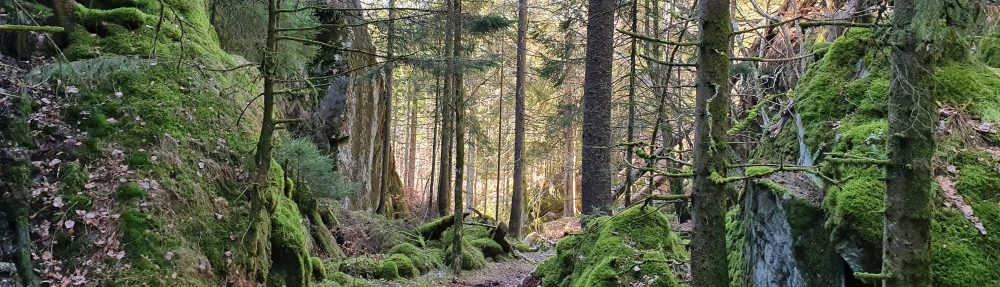
My grandmother wrote in her memoirs how they used to climb up the hill behind their house and in a crevice light a fire to make coffee. This same crevice gave the name to the hill and it still exists today! For the 1923 exhibition a path was cleared to the hill, for those boring persons who didn’t want to travel by funicular.
Some ten years ago I made a rock survey for a new zoning plan that wants to excavate half the Troll Stove hill and put up two tall houses in the new pit. But that would entail 30 metres high rock cuttings and it is placed right on top of sewers which would give inescapable ”aromas” in the new, expensive condos… The houses have yet to be built. The hill consists of mainly gabbro with various grain sizes. Very pretty.
Episode 202: kv Skokloster
District: Johanneberg (formerly Lorensberg)
Photo date: 13 August 2021
Here is another block that is properly part of Lorensberg. The zones, districts and sub-districts are really confused here… Maybe it’s the ghosts of those who were executed here that play havoc with the minds of city officials? The ghosts didn’t seem to bother my grandmother and her ancestors who lived here for a century. But for the 1923 exhibition, a cable-car was drawn right over this block, which was yet to be built, and over their garden – and sometimes the gondolas stopped and the passengers had to be rescued. So she said.
Episode 203: kv Getebergsäng – inside Liseberg
District: Heden
Photo date: 16 August 2021
Liseberg was one of the many small farms that dotted the area until 1923 or thereabouts. A few of the farm buildings still exist but the gardens have long gone – except maybe here, if you count the funfair as a garden. In her memoirs, my grandmother writes how she visited the manor house once, before the funfair had transformed the idyllic park. She was visiting a school friend who was staying with her relative, the architect Eugen Thorburn.
The 1923 Anniversary Exhibition was a temporary affair, almost ephemeral. And it was a riot of design! Sigfrid Ericson and Arvid Bjerke were the main architects and they created something fairytale-like. All photos from the time are black-and-white but written memories all mention how colourful it was. It was a very ambitious undertaking, with a historical section on the Johanneberg hill and a modern technical section at what became Svenska Mässan. And annexed to that part was the Liseberg funfair, the only part of the venture that wasn’t a spectacular financial loss. So it was decided to keep it and it has generated profit ever since.
Structures at Liseberg come and go, either in planned redevelopment or in sudden fires. The Congress Hall went up in flames in 1973, and the brand new adventure lido that was meant to save the entire tourism sector in Gothenburg melted in a horrid fire a month ago. Wikipedia says the two entrance towers were designed by Axel Jonsson and put up in 1940, as a nod to the two towers from the original exhibition. The pink colour permeating the whole park is said to be the original colour from the exhibition.
Episode 204: kv Getebergsäng (outside Liseberg), kv Sandmusslan, kv Pilgrimsmusslan, kv Immeln, kv Spindeln
District: Heden, Krokslätt (parts formerly Bö and Skår)
Photo date: 16 August 2021
Some 30 years ago I had a job just south of Liseberg and used to walk, run and tram along Södra Vägen almost daily. The big wooden villas and small landshövdingehus that my grandmother knew from her childhood were still there – but just a few years later they had to go to make way for the science centre (designed by Gert Wingårdh) and the award-winning culture museum (designed by Cécile Brisac and Edgar Gonzalez). And for the last six years also for Västlänken. Only the modernist house next to the southern entrance to Liseberg remains, for now…
East of the Mölndal creek the funfair has taken over the city block called Pilgrimsmusslan, where there used to be factories and before that very cheap housing for industrial workers. One part of a larger estate was set off as a sports field and named Balders Hage. This is where the ÖIS football club was started. The factories produced everything from sweets to yarn to engines and some of them were closed only 30 years ago. The Wingårdh bureau also designed the Grand Curiosa Hotel and the lido that burned down earlier this year.
 Rockyramblings