Kvarteren vid Trollspisberget och runt Liseberg

Episodes 201 to 204 cover a suite of architectural styles from the early 1910s to the early 2020s, with a bit of natural design thrown in for good measure.

Episode 201: kv Entitan, kv Koltrasten, kv Blåmesen, kv Munkeboda, Trollspisen

District: Johanneberg (parts formerly in Lorensberg)

Photo date: 13 August 2021

The block called Munkeboda was originally part of district Lorensberg but got chucked into Johanneberg at the latest administrative reshuffle. Based on architecture and population, it really should still be part of Lorensberg, though, with a consulate, a posh villa by Johan Jarlén, now a school, and yet another lodge. It also has a brand new house designed by the Inobi bureau and put up during the last year. For the other blocks in this episode I refer to a general description of the area, page 126ff.

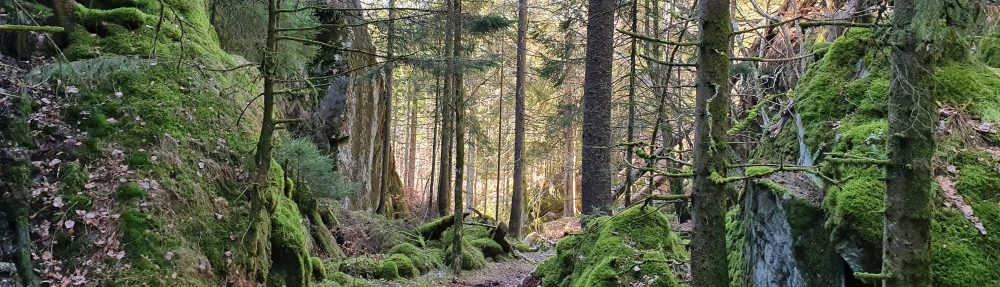
My grandmother wrote in her memoirs how they used to climb up the hill behind their house and in a crevice light a fire to make coffee. This same crevice gave the name to the hill and it still exists today! For the 1923 exhibition a path was cleared to the hill, for those boring persons who didn’t want to travel by funicular.

Some ten years ago I made a rock survey for a new zoning plan that wants to excavate half the Troll Stove hill and put up two tall houses in the new pit. But that would entail 30 metres high rock cuttings and it is placed right on top of sewers which would give inescapable ”aromas” in the new, expensive condos… The houses have yet to be built. The hill consists of mainly gabbro with various grain sizes. Very pretty.

Episode 202: kv Skokloster

District: Johanneberg (formerly Lorensberg)

Photo date: 13 August 2021

Here is another block that is properly part of Lorensberg. The zones, districts and sub-districts are really confused here… Maybe it’s the ghosts of those who were executed here that play havoc with the minds of city officials? The ghosts didn’t seem to bother my grandmother and her ancestors who lived here for a century. But for the 1923 exhibition, a cable-car was drawn right over this block, which was yet to be built, and over their garden – and sometimes the gondolas stopped and the passengers had to be rescued. So she said.

Episode 203: kv Getebergsäng – inside Liseberg

District: Heden

Photo date: 16 August 2021

Liseberg was one of the many small farms that dotted the area until 1923 or thereabouts. A few of the farm buildings still exist but the gardens have long gone – except maybe here, if you count the funfair as a garden. In her memoirs, my grandmother writes how she visited the manor house once, before the funfair had transformed the idyllic park. She was visiting a school friend who was staying with her relative, the architect Eugen Thorburn.

The 1923 Anniversary Exhibition was a temporary affair, almost ephemeral. And it was a riot of design! Sigfrid Ericson and Arvid Bjerke were the main architects and they created something fairytale-like. All photos from the time are black-and-white but written memories all mention how colourful it was. It was a very ambitious undertaking, with a historical section on the Johanneberg hill and a modern technical section at what became Svenska Mässan. And annexed to that part was the Liseberg funfair, the only part of the venture that wasn’t a spectacular financial loss. So it was decided to keep it and it has generated profit ever since.

Structures at Liseberg come and go, either in planned redevelopment or in sudden fires. The Congress Hall went up in flames in 1973, and the brand new adventure lido that was meant to save the entire tourism sector in Gothenburg melted in a horrid fire a month ago. Wikipedia says the two entrance towers were designed by Axel Jonsson and put up in 1940, as a nod to the two towers from the original exhibition. The pink colour permeating the whole park is said to be the original colour from the exhibition.

Episode 204: kv Getebergsäng (outside Liseberg), kv Sandmusslan, kv Pilgrimsmusslan, kv Immeln, kv Spindeln

District: Heden, Krokslätt (parts formerly Bö and Skår)

Photo date: 16 August 2021

Some 30 years ago I had a job just south of Liseberg and used to walk, run and tram along Södra Vägen almost daily. The big wooden villas and small landshövdingehus that my grandmother knew from her childhood were still there – but just a few years later they had to go to make way for the science centre (designed by Gert Wingårdh) and the award-winning culture museum (designed by Cécile Brisac and Edgar Gonzalez). And for the last six years also for Västlänken. Only the modernist house next to the southern entrance to Liseberg remains, for now…

East of the Mölndal creek the funfair has taken over the city block called Pilgrimsmusslan, where there used to be factories and before that very cheap housing for industrial workers. One part of a larger estate was set off as a sports field and named Balders Hage. This is where the ÖIS football club was started. The factories produced everything from sweets to yarn to engines and some of them were closed only 30 years ago. The Wingårdh bureau also designed the Grand Curiosa Hotel and the lido that burned down earlier this year.

Kvarteren Taltrasten, Näktergalen, Tofsmesen, Göken, Grönsiskan, Lappmesen

Episodes 196 to 200 enter district Johanneberg, a relatively young administrative unit from 1920. The northern or lower part was built up a hundred years ago to an older type of city plan.

Episode 196: kv Taltrasten

District: Johanneberg

Photo date: 31 July 2021

The first plan for this part of the city was drawn up in 1901, revised in 1904 and 1917 and again in 1936. It was built up in the mid-1920s to late-1930s – and by that time the styles visualised in the plans had shifted from Jugend over National Romanticism to 1920s Classicism and finally crowned by glorious Modernism.

The lower or northern part of Johanneberg was built to Albert Lilienberg’s plan of 1917. This means curved streets and large enclosed courtyards without outhouses. So the flats in the tenement buildings, like in this block by Hugo Jahnke, were built with all the mod cons like a WC and a bathroom. Even working class landshövdingehus started to get amenities like this at the time, even though the bourgeoisie decried it as an unnecessary and immoral luxury.

Episode 197: kv Näktergalen

District: Johanneberg

Photo date: 26 July 2021

Taltrasten and Näktergalen were planned as non-identical twins, a portal to the upper parts of the hill. From the lower Viktor Rydbergsgatan, curved driveways lead up to almost Egyptian-type pylons, as to a grand manor house or castle of yore. Along the street are retaining walls and abutments for the overlying slopes – all carefully designed for sober beauty and monumentality. The architects were Harald Ericson and Ragnar Ossian Swensson.

Episode 198: kv Tofsmesen

District: Johanneberg

Photo date: 31 July 2021

When my grandmother’s father suddenly died in 1931, her widowed mother moved to Teknologgatan from the rather pretty little villa in Skår where they were relocated after the city expropriated their century-old family cottage in 1926. During her time here, she would have seen this little block completed in the mid-1930s, and all the radical changes that were soon to come to the Johanneberg area.

Episode 199: kv Göken

District: Johanneberg

Photo date: 1 August 2021

More houses should have informative plaques! That would make it much easier writing these narrations. In Majorna, the city’s management company Familjebostäder has put up several plaques relating the history of the landshövdingehus blocks they have preserved rather than torn down and replaced with concrete boxes.

Until all these stone houses were built, district Johanneberg was forested wilderness on the edge of the farms Gibraltar, Johanneberg and the Executioner’s. A creek ran down towards the west more or less along Vidblicksgatan. There is not much else to say about the Cuckoo, a typical late-1920s Classicism courtyard block. However, it’s rather big, and it has signed reliefs on the main facade. But would famous sculptor Carl Eldh really have stooped to such an insignificant assignment?

Episode 200: kv Grönsiskan, kv Lappmesen

District: Johanneberg

Photo date: 1 August 2021

My possibly-gay great-uncle Helmer was a banker who lived in a long flat at Walleriusgatan 2. We visited him and his possible-partner many times and it was a flat full of beautiful ceramics and modernist paintings. I say full but it was in no way cluttered, the flat was as elegant as he himself. When he died, my uncle Martin sold some of the paintings he inherited to finance building projects at his country house, so it was ”real” art that uncle Helmer collected. Not bad for a lad born to a caretaker for tennis pavillions!

Grönsiskan sits at the edge of the old planning style with big enclosed courtyards and looks out on the open style that followed. The church also straddles the two eras, Classicism and Modernism, with basically no decorations except a few crosses. My great-uncle used to complain about the bells tolling straight into their flat.

Kvarteren Gälakvist, Skaraborg, Läckö, Koberg, Gräfsnäs, Årnäs

Episodes 181 to 185 ramble around the Lorensberg villa-town and get all arty down by Poseidon, where Lexxians once gathered…

Episode 181: kv Gälakvist

District: Lorensberg

Photo date: 20 June and 25 September 2021

When my mother studied art history in the 1980s, the department was located in one of these houses, probably Bjerke’s studio, my memory is hazy. I do remember the premises felt a bit cramped, though.

Episode 182: kv Skaraborg

District: Lorensberg

Photo date: 20 June 2021

Albert Lilienberg planned the Lorensberg villa-town around a tiny square, Högåsplatsen, and made full use of the terrain contours for laying out the streets and plots. Earlier planning ideals would have laid out as square a grid as possible and instead made full use of dynamite to level the terrain – as is the custom today as well.

Högåsplatsen has a very light and airy feeling to it, also slightly English. Around it are all these lovely century-old houses: the villa where Ågren lived for 40 years before bequeathing it to the university; the only remaining wooden villa, typical of the time; the Mellgren villa that was taken over by medicos; and the rather stupendous Broström house with its nautical associations.

Episode 183: kv Läckö

District: Lorensberg

Photo date: 20 June 2021

The houses in Läckö are a few years older than Gälakvist and Skaraborg, and the shift in styles is very noticeable. National Romanticism gives way to 1920s classicism and Modernism is just beginning to be felt. We add a couple of names to our list of architects: Karl Severin Hansson and Karl Samuelsson.

Two recent houses have been added too, where the architects’ usual crede that new houses should only and totally reflect the dominant contemporary style has been vetoed, either by the city architect (unlikely, that office is utterly insipid) or by the powerful interests operating on this hill (more likely, Gothenburg isn’t nicknamed Graftenburg for nothing). The two new houses are at Bengt Lidnersgatan 7 and Ekmansgatan 5. The latter was designed by Albert Svensson in what must be called a Neo-Neo-Classical style, and can be seen in Intermission IIIb.

One of the big names on the hill was Ekman, a once very influential family of traders and magnates on a par with Dickson and Wijk. Their flame has somewhat gone out these days, though. But the house that bears their name here is quite spectacular, ushering in the 1920s style that would soon be seen in all the landshövdingehus districts springing up around the outskirts of town.

Episode 184: kv Koberg

District: Vasastaden (formerly Lorensberg)

Photo date: 20 June 2021

In Koberg we add another young architect, Ebbe Crone. The houses in this block are variously offices and housing associations. Most houses in the villa-town were residential when built and then turned into offices in the 1950s. Recently, quite a few of the offices have been converted back to residential use. But not the Builders’ Association, which is still very active in its offices in Villa Hertz.

Episode 185: kv Gräfsnäs, kv Årnäs

District: Lorensberg

Photo date: 6 June 2021

Finally, here we are at one of the major landmarks in Gothenburg, the Art Museum. The top of Kungsportsavenyen had long been left undeveloped because the city planners recognized that it had to be rather spectacular and not a whim or half-measure that would make everyone angry over the years. So it wasn’t until the 300th anniversary exhibition that ideas and plans finally gelled: they simply had to produce something for that event! And thus was borne the Gothenburg Art Museum, which together with the Art Hall next to it are the only structures in the area left of the exhibition. (My grandmother tells in her memoirs how she used to walk across the building site to get to school, and one day dropped a bottle of tadpoles in the excavated rubble…)

The museum contains the original Fürstenberg collection from the late 1800s, which is very typical of the time with animals and naked young women, several Dutch masters including a scary painting of the severed head of St John the Baptist, and modern sections including temporary exhibition areas in the extension designed by Rune Falk and the White Bureau. Both the Art Museum and the Art Hall were designed by Ericson and Bjerke, who together with Swensson and Torulf were responsible for the overall design of the anniversary exhibition.

Surrounding Götaplatsen were temporary strucures that were dismantled after the exhibition. It took a decade or more before the area was completed, with the iconic (yes, I use that worn word very consciously) statue of Poseidon, the City Theatre and the Concert Hall. Classicism and finest Modernism surround the open space, where political manifestations happen, music gigs take place and sports stars are given heroes’ welcomes. And Lexxians gather to sing the Brunnen-G song, at least we did a quarter of a century ago…

Kvarteren Topasen, Zirkonen, Månstenen, Akvamarinen, Ullevi, Heliotropen, Bärnstenen, Polishuset, Arenan

Episodes 115 to 119 string a necklace of semi-precious stones from the mid-1900s, and engage in some sports and policing as well.

Episode 115: kv Topasen

District: Heden

Photo date: 27 February 2021

The Gothenburg 300th Anniversary Exhibition in 1923 must have been an amazing event. I wish I could have seen it! My grandmother wrote about it in her memoirs, that she went several times and had a great time. At the Gothenburg Historical Museum site you can look at loads of official photographs from Jubileumsutställningen, and dream of a hundred years ago.

Fifty years later, the city decided to spruce up the old exhibition area with sports facilities and a modern convention centre. And developments are still ongoing! Svenska Mässan is a hundred years old but the buildings on the site have come and gone. The current main building and the first Gothia Tower are from 1984. The Mercury logo is also a hundred years old, first employed during the Anniversary Exhibition and concurrent conventions.

Scandinavium was designed by Poul Hultberg and had a long and expensive gestation period. Controversies still abound: it was ultra-modern fifty years ago but today the city plans to tear it down and replace it with something else. The Valhalla Lido was built in 1956, from designs by Nils Olsson and Gustaf Samuelsson. The main swimming pool has a very zeitgeisty mosaic that you can look at instead of being splashed by the hordes of swimmers that use it daily.

But I still haven’t figured out what the sculpture by the river is…

Episode 116: kv Zirkonen, kv Månstenen, kv Akvamarinen, kv Ullevi

District: Heden

Photo date: 19 September and 24 December 2020

There are no residential buildings between Skånegatan and the Mölndal River, only schools and events centres. All of them are from the 1940s or later – except Katrinelund. The modest kindergarten was built in 1963.

The city’s property company Higab also manages Ullevi, the 75000-seat arena that is mostly used for rock concerts these days. It used to be called New Ullevi, designed by Jaenecke & Samuelsson. The Old Ullevi arena was recently torn down and rebuilt, so it should properly be named New Old Ullevi, right?

Episode 117: kv Heliotropen

District: Heden

Photo date: 24 December 2020

What a warren of schools! Even old Katrinelund has become a school, for gardening and farming. The oldest school building in The Heliotrope is the east wing of Burgården High, originally called the Gothenburg Middle School, that was built in 1938 from designs by Sigfrid Ericson. In 1947 came the Practical Middle School from the pen of Axel Forssén and the girls’ school from 1950 was designed by Erik Ragndal. The latest addition is the west wing from the 1990s, with the striking sculpture by Roland Anderson.

The Norwegian Sailors’ Church was designed by the wonderfully named architects Gudolf Blakstad and Herman Munthe-Kaas. Sailors’ churches are very useful: when my mother and I went on a voyage to Amsterdam in 1971 the ferry took damage in a storm and we were stranded, waiting for my father to arrive on his ship. The Swedish Sailors’ Church took us in and we were very well looked after.

The cineplex under the skate park was originally meant to be built inside the hill behind the Arts Museum. That project was appropriately named the Hall of the Mountain King, but when it was actually realised twenty years later, with the same name, it was as a concrete bunker. It’s functional enough though, even has a mini-IMAX these days.

Episode 118: kv Bärnstenen, kv Polishuset, kv Arenan

District: Heden

Photo date: 16 and 20 September 2020

More public buildings and offices! City block Amber was built ten years ago, filling up an open area that once was a soldiers’ cemetery and a meadow belonging to the old brick works. The new buildings were designed by White Architects, with pre-rusted iron cladding that was a big fad in 2015.

The Police House was built in 1967 and designed by the Backström & Reinius bureau. You can’t see it, though, as it is a classified building and it is forbidden to take photos of it. It was recently extended to a whole judiciary complex, with one building for courtrooms and another for holding cells. But given the current crime wave it would probably need even further extensions – Sweden has become the new Sicily.

Next to the law is sports. The New Old Ullevi arena was built in 2009 and is often used for football matches. The tennis complex harks back to 1901, when my ancestor took up office as caretaker. The 2016 highrise was designed by the Design Bureau (sic).