Kvarteren vid Trollspisberget och runt Liseberg

Episodes 201 to 204 cover a suite of architectural styles from the early 1910s to the early 2020s, with a bit of natural design thrown in for good measure.

Episode 201: kv Entitan, kv Koltrasten, kv Blåmesen, kv Munkeboda, Trollspisen

District: Johanneberg (parts formerly in Lorensberg)

Photo date: 13 August 2021

The block called Munkeboda was originally part of district Lorensberg but got chucked into Johanneberg at the latest administrative reshuffle. Based on architecture and population, it really should still be part of Lorensberg, though, with a consulate, a posh villa by Johan Jarlén, now a school, and yet another lodge. It also has a brand new house designed by the Inobi bureau and put up during the last year. For the other blocks in this episode I refer to a general description of the area, page 126ff.

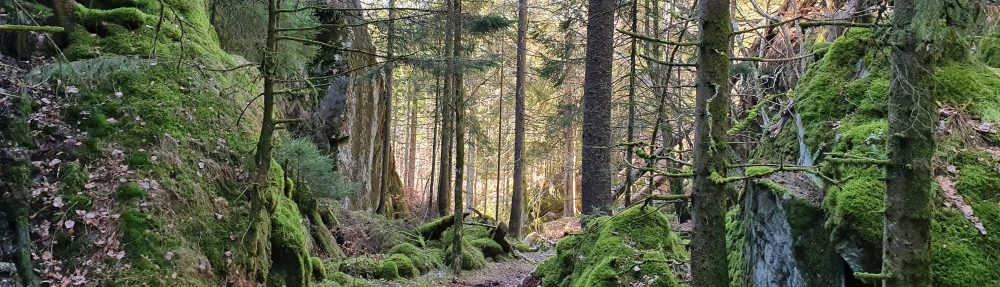
My grandmother wrote in her memoirs how they used to climb up the hill behind their house and in a crevice light a fire to make coffee. This same crevice gave the name to the hill and it still exists today! For the 1923 exhibition a path was cleared to the hill, for those boring persons who didn’t want to travel by funicular.

Some ten years ago I made a rock survey for a new zoning plan that wants to excavate half the Troll Stove hill and put up two tall houses in the new pit. But that would entail 30 metres high rock cuttings and it is placed right on top of sewers which would give inescapable ”aromas” in the new, expensive condos… The houses have yet to be built. The hill consists of mainly gabbro with various grain sizes. Very pretty.

Episode 202: kv Skokloster

District: Johanneberg (formerly Lorensberg)

Photo date: 13 August 2021

Here is another block that is properly part of Lorensberg. The zones, districts and sub-districts are really confused here… Maybe it’s the ghosts of those who were executed here that play havoc with the minds of city officials? The ghosts didn’t seem to bother my grandmother and her ancestors who lived here for a century. But for the 1923 exhibition, a cable-car was drawn right over this block, which was yet to be built, and over their garden – and sometimes the gondolas stopped and the passengers had to be rescued. So she said.

Episode 203: kv Getebergsäng – inside Liseberg

District: Heden

Photo date: 16 August 2021

Liseberg was one of the many small farms that dotted the area until 1923 or thereabouts. A few of the farm buildings still exist but the gardens have long gone – except maybe here, if you count the funfair as a garden. In her memoirs, my grandmother writes how she visited the manor house once, before the funfair had transformed the idyllic park. She was visiting a school friend who was staying with her relative, the architect Eugen Thorburn.

The 1923 Anniversary Exhibition was a temporary affair, almost ephemeral. And it was a riot of design! Sigfrid Ericson and Arvid Bjerke were the main architects and they created something fairytale-like. All photos from the time are black-and-white but written memories all mention how colourful it was. It was a very ambitious undertaking, with a historical section on the Johanneberg hill and a modern technical section at what became Svenska Mässan. And annexed to that part was the Liseberg funfair, the only part of the venture that wasn’t a spectacular financial loss. So it was decided to keep it and it has generated profit ever since.

Structures at Liseberg come and go, either in planned redevelopment or in sudden fires. The Congress Hall went up in flames in 1973, and the brand new adventure lido that was meant to save the entire tourism sector in Gothenburg melted in a horrid fire a month ago. Wikipedia says the two entrance towers were designed by Axel Jonsson and put up in 1940, as a nod to the two towers from the original exhibition. The pink colour permeating the whole park is said to be the original colour from the exhibition.

Episode 204: kv Getebergsäng (outside Liseberg), kv Sandmusslan, kv Pilgrimsmusslan, kv Immeln, kv Spindeln

District: Heden, Krokslätt (parts formerly Bö and Skår)

Photo date: 16 August 2021

Some 30 years ago I had a job just south of Liseberg and used to walk, run and tram along Södra Vägen almost daily. The big wooden villas and small landshövdingehus that my grandmother knew from her childhood were still there – but just a few years later they had to go to make way for the science centre (designed by Gert Wingårdh) and the award-winning culture museum (designed by Cécile Brisac and Edgar Gonzalez). And for the last six years also for Västlänken. Only the modernist house next to the southern entrance to Liseberg remains, for now…

East of the Mölndal creek the funfair has taken over the city block called Pilgrimsmusslan, where there used to be factories and before that very cheap housing for industrial workers. One part of a larger estate was set off as a sports field and named Balders Hage. This is where the ÖIS football club was started. The factories produced everything from sweets to yarn to engines and some of them were closed only 30 years ago. The Wingårdh bureau also designed the Grand Curiosa Hotel and the lido that burned down earlier this year.

Kvarteren Gälakvist, Skaraborg, Läckö, Koberg, Gräfsnäs, Årnäs

Episodes 181 to 185 ramble around the Lorensberg villa-town and get all arty down by Poseidon, where Lexxians once gathered…

Episode 181: kv Gälakvist

District: Lorensberg

Photo date: 20 June and 25 September 2021

When my mother studied art history in the 1980s, the department was located in one of these houses, probably Bjerke’s studio, my memory is hazy. I do remember the premises felt a bit cramped, though.

Episode 182: kv Skaraborg

District: Lorensberg

Photo date: 20 June 2021

Albert Lilienberg planned the Lorensberg villa-town around a tiny square, Högåsplatsen, and made full use of the terrain contours for laying out the streets and plots. Earlier planning ideals would have laid out as square a grid as possible and instead made full use of dynamite to level the terrain – as is the custom today as well.

Högåsplatsen has a very light and airy feeling to it, also slightly English. Around it are all these lovely century-old houses: the villa where Ågren lived for 40 years before bequeathing it to the university; the only remaining wooden villa, typical of the time; the Mellgren villa that was taken over by medicos; and the rather stupendous Broström house with its nautical associations.

Episode 183: kv Läckö

District: Lorensberg

Photo date: 20 June 2021

The houses in Läckö are a few years older than Gälakvist and Skaraborg, and the shift in styles is very noticeable. National Romanticism gives way to 1920s classicism and Modernism is just beginning to be felt. We add a couple of names to our list of architects: Karl Severin Hansson and Karl Samuelsson.

Two recent houses have been added too, where the architects’ usual crede that new houses should only and totally reflect the dominant contemporary style has been vetoed, either by the city architect (unlikely, that office is utterly insipid) or by the powerful interests operating on this hill (more likely, Gothenburg isn’t nicknamed Graftenburg for nothing). The two new houses are at Bengt Lidnersgatan 7 and Ekmansgatan 5. The latter was designed by Albert Svensson in what must be called a Neo-Neo-Classical style, and can be seen in Intermission IIIb.

One of the big names on the hill was Ekman, a once very influential family of traders and magnates on a par with Dickson and Wijk. Their flame has somewhat gone out these days, though. But the house that bears their name here is quite spectacular, ushering in the 1920s style that would soon be seen in all the landshövdingehus districts springing up around the outskirts of town.

Episode 184: kv Koberg

District: Vasastaden (formerly Lorensberg)

Photo date: 20 June 2021

In Koberg we add another young architect, Ebbe Crone. The houses in this block are variously offices and housing associations. Most houses in the villa-town were residential when built and then turned into offices in the 1950s. Recently, quite a few of the offices have been converted back to residential use. But not the Builders’ Association, which is still very active in its offices in Villa Hertz.

Episode 185: kv Gräfsnäs, kv Årnäs

District: Lorensberg

Photo date: 6 June 2021

Finally, here we are at one of the major landmarks in Gothenburg, the Art Museum. The top of Kungsportsavenyen had long been left undeveloped because the city planners recognized that it had to be rather spectacular and not a whim or half-measure that would make everyone angry over the years. So it wasn’t until the 300th anniversary exhibition that ideas and plans finally gelled: they simply had to produce something for that event! And thus was borne the Gothenburg Art Museum, which together with the Art Hall next to it are the only structures in the area left of the exhibition. (My grandmother tells in her memoirs how she used to walk across the building site to get to school, and one day dropped a bottle of tadpoles in the excavated rubble…)

The museum contains the original Fürstenberg collection from the late 1800s, which is very typical of the time with animals and naked young women, several Dutch masters including a scary painting of the severed head of St John the Baptist, and modern sections including temporary exhibition areas in the extension designed by Rune Falk and the White Bureau. Both the Art Museum and the Art Hall were designed by Ericson and Bjerke, who together with Swensson and Torulf were responsible for the overall design of the anniversary exhibition.

Surrounding Götaplatsen were temporary strucures that were dismantled after the exhibition. It took a decade or more before the area was completed, with the iconic (yes, I use that worn word very consciously) statue of Poseidon, the City Theatre and the Concert Hall. Classicism and finest Modernism surround the open space, where political manifestations happen, music gigs take place and sports stars are given heroes’ welcomes. And Lexxians gather to sing the Brunnen-G song, at least we did a quarter of a century ago…

Kvarteren Ulriksdal, Hörningsholm, Tullgarn, Drottningholm, Sparreholm, Gripsholm, Nääs, Visingsborg

Episodes 176 to 180 enter the area of the 1923 Anniversary Exhibition and Lilienberg-land.

Episode 176: kv Ulriksdal

District: Lorensberg

Photo date: 13 June 2021

No architectural historian has devoted time and grants to this area yet so there is not much to add to the narration. The architects for this block and Drottningholm are given as Ernst Torulf, Hjalmar Zetterström, Tor Zetterström, Karl M Bengtsson, Arvid Bjerke, Ragnar Ossian Swensson, Nils Olsson and Erik Holmdal.

Episode 177: kv Hörningsholm, kv Tullgarn

District: Lorensberg

Photo date: 6 June 2021

In the 1980s my mother studied art history at university and she wrote a paper on the City Theatre. I can’t remember much of it because at that time I was not at all interested in architecture or local history – so boring! Then suddenly, overnight almost, I became fascinated by both subjects. Maybe it’s an age thing.

Soon after this episode was completed, the old girls’ school and adjoining car park were razed and something else will be put up there. The zoning document suggests more performing arts space, and an entrance to the new train station at Korsvägen. Something for a later Intermission…

Episode 178: kv Drottningholm

District: Lorensberg

Photo date: 13 June 2021

This block was only half-built when my grandmother passed it on her way to school, or to the family shop at Kungsportsplatsen. The south end of the block abutted the 1923 exhibition area.

Episode 179: kv Sparreholm, kv Gripsholm

District: Vasastaden (formerly Lorensberg)

Photo date: 20 and 22 June 2021

And now we enter the area where the city decided to hold its 300th anniversary exhibition, two years late in 1923. Johanneberg was built in the 1700s and had until recently been a working farm with big gardens and greenhouses but its time was up – and now the last vestiges of the grounds have been excavated away for a new train station. At least this part of Västlänken is still being built, unlike the middle station at Haga.

On the hill was the historical part of the exhibition, with wooden halls built for archeology, design, sports, crematoria (sic), crafts and victualling history, and lots of restaurants. In the middle was a big plaza topped by a strange memorial building. On this site now stands the 1984 part of the university building, and the university library stands on the former main restaurant. The original part of the library building was designed by Ärland Noreen in 1939 but it wasn’t built until 1951. The Coordinator bureau designed the 1982 extension. The yellow high-rise was designed by Jaan Allpere and Claes Melin. For the newest extension to the university building, designed by the KUB bureau, a new zoning plan was drawn up where you can read some of the text I wrote about the rock slopes in the area.

Episode 180: kv Nääs, kv Visingsborg

District: Lorensberg

Photo date: 20 June 2021

With Nääs and Visingsborg we enter the Lorensberg villa area. Albert Lilienberg planned it in 1913 and it was realised by the up and coming set of architects that put their mark on Gothenburg in this and the next couple of decades. The houses were built for the poshest members of the bourgeoisie, and certainly not for plebes and commoners.

Axel Carlander was a very big man in Gothenburg at the time. He made lots of money but also worked tirelessly for the public good. Apart from this National Romanticist gem, he has left his name on a hospital overlooking the funfair Liseberg. The lodge in Nääs is still active and even has a well-designed web page.

Kvarteren Malmöhus, Oppensten, Borgeby, Örbyhus samt Lorensbergsparken

Episodes 171 to 175 tour the tail-end of Neo-Renaissance and celebrate early and late Modernism.

Episode 171: kv Malmöhus

District: Vasastaden (formerly Lorensberg)

Photo date: 30 May 2021

Wallenstam recently changed its logo from the ant carrying a letter m or W, to a stylised ant drawn with a single looping line. Maybe the ant carrying a pine needle, as seen on Engelbrektsgatan 28, is the original logo from the 1950s?

Trying to find some information about the modern houses in the middle of the block (a real estate agent says they were built in 1943), I came across the current zoning plan for the area. It is dated 1867!

Episode 172: kv Oppensten

District: Vasastaden (formerly Lorensberg)

Photo date: 29 May 2021

Wilhelm Röhss was one of the magnates in the 19th century who donated parts of their estates to the city, to be used for the public good. Since the sums were substantial, the foundations are still operating today. The Röhss monies were used to build this museum to which my mother would drag me quite often (my favourite museum was the ethnographic one, with American Indians). When the museum was built, it was in the then-fashionable National Romanticist style. The two extensions were also designed in then-current fashions: Melchior Wernstedt’s 1930s early-Modernism and the late-Modernist one from circa 1960, by Sven Brolid and Jan Wallinder.

At the other end of the block is the Academy of Craft and Design, or some better equivalent to its many names: Slöjdförenings skola, Konstindustriskolan, Högskolan för design och konsthantverk. Hans Hedlund’s original building has been added to by Sigfrid Ericson in 1915 (the penthouse) and the White design bureau in 1992 (filling up the former courtyard). Today, it is part of the university and offers education in all the fine arts.

Episode 173: kv Borgeby

District: Vasastaden (formerly Lorensberg)

Photo date: 30 May 2021

Here is the original Valand that the current Academy of Fine Arts takes its name from. It was quite an important institution (at least locally), producing several fine artists over the years. The school moved to new premises in 1925 and has led a wandering existence since then. The Par Bricole lodge took over the house at that time and are still very much going strong.

The block is built on land that belonged to the old farm Kristinelund. Nothing remains of it but the street name, and apart from Valand nothing remains of the first stone houses either. At the south end of the block is a beautiful Modernist house designed by Nils Olsson in the late 1930s. The middle of the block was razed in the late 1950s and two new houses designed by Helge Zimdal were put up along Avenyn. Some ten years ago they were given a makeover, and the western side of the block was completely rebuilt from designs by Anna Sunnerö at the Wingårdh bureau. Gert Wingårdh is the current mega-star in Swedish architecture.

Episode 174: kv Örbyhus

District: Vasastaden (formerly Lorensberg)

Photo date: 29 May 2021

In this block, too, the back side along Teatergatan has been redeveloped from designs by Jacek Zalecki at Wingårdhs. Apparently, the previous 1930s and 1960s houses were ”shoddy” and ”disgusting” – the very same words used for the districts that were lamentedly razed in the 1960s and 70s. Plus ça change…

Originally, the whole block was built in intricate Neo-Renaissance in the late 1890s, but only the end houses have been left standing. Of the three middle houses along Avenyn, the northern one was built in 1935 and designed by Nils Olsson in a calm and clean Modernist style. The other two houses were designed by Lund & Valentin in late-Modernist style and built in 1961. As in Borgeby, they were given a makeover by Wingårdhs some ten years ago.

Episode 175: Lorensbergsparken

District: Lorensberg

Photo date: 5 June 2021

When I was a kid, my parents used to go dancing at a place called Sophus, named after the last and famous restaurateur at the Lorensberg entertainment complex, much written about by Fredberg. Almost nothing remains of it today, other than the Lorensberg Theatre and the name of the whole district. And a small play area with circus horses…

The big hotel was designed by Nils Einar Eriksson in 1948, to house visiting industrialists. It still looks much like it did when it opened but the city library has been given a facelift designed by the Erséus bureau. The theatre was designed by Karl M Bengtsson but when it was turned into a cinema in 1934 it was redesigned by R O Swensson and H Widlund. In 1987 it was turned back into a theatre which it still is. For now.

Kvarteren Furan, Granen, Linden, Aspen, Sälgen

Episodes 161 to 165 witness the sprouting of tenement buildings, schools and scandalettes in circa 1890.

Episode 161: kv Furan part 3

District: Vasastaden

Photo date: 18 April 2021

What is a ”tomte”, plural ”tomtar”? In American, it is usually translated as ”elf”, especially for small tomtar that help Santa Claus or Father Christmas. ”Gnome” is another term used, commonly for the garden variety. But the more original type in Sweden is the farm tomte: a small entity looking after the farm and helping the family, if they behave courteously. They were a staple of children’s faritytales. Later, this kind of tomte became conflated with the Christmas character, Jultomten, who is basically Father Christmas/Santa Claus. But before Jultomten, the main yuletide creature was the Christmas Billygoat, still remembered as a Christmas ornament made of straw.

On the house fronting Vasagatan 11, Thorvald Rasmussen, brother of one of the architects, painted several tomtar being industrious, as well as other fairytale creatures. The house is a sort of German Neo-Renaissance Alpen-style, quite at odds with anything else in Gothenburg. When it was built, this was still an area with large villas and it fitted in quite well. Even the taller residential building behind it, built a few years earlier for the whole Hedlund family, didn’t clash as much with the genteel surroundings. But a few years later, the villas gave way to stone colossi…

From my tolkienist friends, I learn that the Odd Fellows are still going strong, as are all the other old orders too. One would have thought the social democratic system that has pervaded Swedish society since the 1930s would have stamped out such activities – but the social democratic party can, if you want to, be seen as a great big lodge itself!

Episode 162: kv Granen

District: Vasastaden

Photo date: 1 May 2021

When I first started on this series in early 2020, it was just for my own personal enjoyment and maybe to show my hometown to some lexxian and tolkienist friends on social media. Just a bit of fun. I added some normal music, without narration. Boom! the youtube copyright algorithms struck! So I decided to make my own soundtracks, it being difficult to schedule recordings with friends who are actually good at making music. And I started narrating more intensely, to mask the bad soundtracks. Of course, the narration soon spiralled out of control, and for this long block I have included pretty much all the text I could find in ”Vasastaden-Lorensberg” and the block entry in the Old Gothenburg blog.

Regarding the farms that many of the new 1800s and 1900s blocks were put up on, there is an informative paper (in Swedish) that can be found in the city museum catalogue, with a map of the general area of this episode on page 29. There are many more potentially interesting papers in the catalogue, with the tag ”kulturmiljörapport”.

Episode 163: kv Linden

District: Vasastaden

Photo date: 24 April 2021

When my grandmother went to school here in the late 1910s and early 1920s, all the big stone houses around it had already been built. She described her walk to school from the family cottage on the edge of town, passing horses, crossing still un-built areas and describing various characters along the way. But in 1889 the area was still semi-rural, with intense exploitation just around the corner.

The girls’ school itself is described by both CRA Fredberg and the Old Gothenburg site (and of course in ”Vasastaden-Lorensberg”, page 174).

Episode 164: kv Aspen

District: Vasastaden

Photo date: 22 May 2021

Water pipes, bowls courts, farms, bandits, shops and tenants – the history of this block is quite rich! Once the farm, the inn and the shacks had gone, stone houses were put up around 1890. At the northern and western sides, the builders/designers were H & J Börjesson, Nathan Persson, Hedström & Svensson and C B Andersson. The rest of the block had to await new planning from Albert Lilienberg in 1910. The eastern part was built up along the steep street in 1912, from designs by Hjalmar Cornilsen and Zetterström & Jonsson. The south end wasn’t completed until the late 1910s. So we can study the architectural fashions over 30 years: French, German and Italian Neo-Renaissance, Neo-Gothic, Jugend, National Romanticism and the precursor to 1920s Classicism.

Episode 165: kv Sälgen

District: Vasastaden

Photo date: 1 May 2021

CRA Fredberg devotes almost a whole chapter to this school. Apparently, there was a scandalette over the architectural contract, involving the Hedlund family: S A made sure his nephew Hans won it. Björner son of Hans designed the extensions that were added in 1912. As Björner also did with Hans’s library building in 1926. What a family saga!

Kvarteren Enen, Idegranen, Lönnen, Furan

Episodes 156 to 160 contemplate heavy development in the 1890s and the 1960s, around a steep hill.

Episode 156: kv Enen

District: Vasastaden

Photo date: 17 April 2021

There are so many beautiful old houses preserved in this block. They are all described in fine detail in ”Vasastaden-Lorensberg”, page 318ff. One of them, at Haga Kyrkogata 28, has even featured in a major Swedish television series a few years back. Or so I understand, I never watched it myself. The TV show also borrowed 1950s and 60s type radios and television sets from the splendid radio museum on Hisingen.

The narration for this episode is pretty complete but here are some more facts. The farm Anneberg can be seen on an old photo in the City Museum database. The Fogelberg Park was originally called The Viewpoint but was quickly encircled by tall houses and later trees. There is no view to be had anymore, especially in the leafy season. Fogelberg was a sculptor who created the statue of Gustav II Adolf at the main square.

Episode 157: kv Idegranen

District: Vasastaden

Photo date: 25 April 2021

The Old Gothenburg site has an entry on the Society for Schools for Young Children. The rest of the block is also covered in the link for episode 156.

Episode 158: kv Lönnen

District: Vasastaden

Photo date: 25 April 2021

The posh villas along Föreningsgatan and the general history of the area is also covered by the Old Gothenburg site (and of course in ”Vasastaden-Lorensberg”). In the days when they were built, it was considered a rather long slog to reach the inner city where the banks and shops were. A trip to Örgryte was a full day affair!

Since I can’t read maps properly I accidentally included Södra Viktoriagatan 42 which is a separate block called Järneken (The Holly), and part of city block Pilträdet (The Willow) that was redeveloped in the 1960s. Sorry.

Episode 159: kv Furan part 1

District: Vasastaden

Photo date: 18 and 24 April 2021

The Jugend or Art Nouveau villa at Viktoriagatan 17 can be considered a part of the Officials’ area around Föreningsgatan.

Episode 160: kv Furan part 2

District: Vasastaden

Photo date: 18 April 2021

In 2023 I could take a good look at the back of Viktoriagatan 15 A/B, and even the inside! Because the rock-face behind the houses was in dire need of reinforcements, including rope work for scaling off loose stones and boulders, clearing away trees whose roots break away blocks, and installing rock bolts. The housing association representative was very interested and I lectured rather condescendingly at him: he turned out to be professor emeritus of structural geology…

The sad story of Gegerfelt and the speculators is told in full in ”Vasastaden-Lorensberg” and more narration is added at the Old Gothenburg site. CRA Fredberg also writes about the Eduard Magnus memorial that looked much prettier than the current institutional building from the 1950s.

The nude streetlight has recently been discussed in one of the Old Gothenburg fora. It is apparently a completely private light, put up in 1971 by the former owner of Vasagatan 7. And the city allowed it!

Kvarteren Boken, Alen, Husaren samt Hagakyrkan och Gamla Stadsbiblioteket

Episodes 151 to 155 explore some of the many schools located in the west part of Vasastaden.

Episode 151: kv Boken

District: Vasastaden

Photo date: 28 March 2021

Here is a block devoted to mind and spirit: two schools, two orders, a place of worship and a charitable foundation. The Hertz and Kjellberg houses, the oldest ones, were designed by Frans Jacob Heilborn and built by P J Rapp. Storgatan 1 was built by J J Lundström soon after. Along Bellmansgatan, the middle properties were bought up by Nils Andersson’s building company and the subsequent houses, including the Rudebeck school, were designed by Adrian Peterson in the early 1870s.

My cousin went to the Rudebeck school and it is still going strong. Back in the 1980s, so-called free schools were unusual and only for the very posh. In the 1990s and especially the noughties, Sweden decided to totally overhaul its education system and let the market forces run schools: freedom and competition should make everything better for everyone. So today free schools is the new norm and can be found in almost every block, especially in Vasastaden.

Episode 152: kv Alen

District: Vasastaden

Photo date: 28 March 2021

This was once a two-in-one park block like the ones to the east of it. Adrian Peterson designed the western half in 1872 for A E Broddelius, and Victor von Gegerfelt copied the designs for the eastern half seven years later for builder Anders Johanson. The style was lavishly Neo-Renaissance, as the times dictated.

The western half of the block was demolished in 1939, to make way for the evangelical Smyrna church. They moved out in 2019, to a brand new building in Frihamnen.

Episode 153: Hagakyrkan

District: Vasastaden

Photo date: 10 April 2021

For centuries, the inhabitants of district Haga had been fed up with not having a nearby church. Finally in the mid-1800s, monies were supplied by donations from wealthy magnates. One of them was director David Carnegie who had just hired architect Adolf Edelswärd to design a replica Scottish church at his factory community in Klippan west of Gothenburg. So he got the job of redesigning the Neo-Gothic Haga Church too, more or less simultaneously. Which came first, the Klippan or the Haga church?

Almost two years after this episode was made, work was stopped on the railway and station under the church. Everyone involved knew that a Turkish-Italian-Norwegian consortium was not ideal for major infrastructure construction in the west of Sweden, with thixotropic clays overlying crystalline bedrock. It’s not the normal soft sedimentary rocks and hard soils that the rest of the continent is used to! So Trafikverket cancelled their contract in January 2023 and has since tried to find new contractors. Maybe work will resume in the next few years? Meanwhile, design work for the station is ongoing and to say it is challenging would be a huge understatement.

Episode 154: Gamla Stadsbiblioteket

District: Vasastaden

Photo date: 10 April 2021

The Social Sciences Library has been closed for several years because of the Västlänken works. It is unclear what will happen to the building in the future, as the works will continue for several years ahead, see above.

Episode 155: kv Husaren

District: Haga

Photo date: 17 April 2021

Until the early to mid 1900s, Gothenburg was primarily a trading city and it was important to have skilled merchants and financiers. Lower and middle economic schools existed (my grandparents met at one) but not higher education, at academic levels. Only in the late 1940s was this School of Economics realised, after substantial donations had been made.

The tall building along Vasagatan was designed by Sture Ljungqvist and Carl Nyrén and put up by Byggnads AB Olle Engkvist in 1950. East of this marble-clad body lay an L-shaped building with red-brick facade – but it was razed for Västlänken soon after having been pre-listed. The rest of the remaining buildings were put up in 1994 and 2009 from designs by the Erséus, Frenning & Sjögren bureau. Since 2020, the northeastern part of the block has been a building site and will continue to be so for the foreseeable future, due to Västlänken.

Kvarteren Masurbjörken, Asken, Almen, Glasbjörken, Apeln

Episodes 146 to 150 travel back in time, from the late 1890s to the early 1870s.

Episode 146: kv Masurbjörken

District: Vasastaden

Photo date: 21 February 2021

In this 1880s photo by Aron Jonason we can see the original Church of Bethlehem and part of the slum area called Flygarns Haga. The new church and ancillary buildings take up almost half of this block. It was designed by Johannes Olivegren and put up in 1963. Apart from the church itself, the south end of the block holds a seniors’ housing complex, tenements, shops and a carpark.

Aron Jonason was a prolific photographer and meister punster in the late 1800s. His friends sometimes called him ”the father of the Gothenburg witticism”. One of those friends was CRA Fredberg who wrote his biography, with a large collection of jokes. My grandmother had it and it is now in my bookshelf. But his richest legacy is the large number of excellent photos made public in the Gothenburg city museum’s database.

Episode 147: kv Asken

District: Vasastaden

Photo date: 19 December 2020

The YMCA’s Neo-Gothic castle is one of four park blocks that were put up in the very late 1890s. The Y held an architectural competition that was won by architects Lindvall & Boklund from Malmö – but apparently they had to have a Gothenburg manager and that was Hans Hedlund, who added his own touch to the facade. The contractor was Nathan Persson and the block was built in 1897. The block held gyms, meeting halls, tenements, and even a little cinema! Today, it is of course a highschool.

Episode 148: kv Almen

District: Vasastaden

Photo date: 13 February 2021

As we move west in Vasastaden, we also move back in time: we are now in the 1870s, when French Neo-Renaissance was de rigueur. CRA Fredberg recounts wistfully how this was meadowland until the 1870s, with servant girls and hussars stepping out in the new King’s Park, various shady goings on in the hills and shrubberies nearby, and poor sanitation and building standards.

Episode 149: kv Glasbjörken

District: Vasastaden

Photo date: 21 March 2021

There are 15 properties in this block and all but one of them from the 1870s-1880s. The architects and builders were both well-respected big names, and several who had started out building landshövdingehus in workers’ districts and now took on bigger jobs in stone. It is an all-residential block, along Vasagatan with restaurants at the ground floor. And of course there is a school too, since 1937 at Karl Gustavsgatan 5. The 1938 house was designed by Gunnar Gillermo.

Episode 150: kv Apeln

District: Vasastaden

Photo date: 10 April 2021

Ah, the Heyman Villa. I had never even noticed it before I started these walks. At this house, I was trying to find the best angle for photographing the door handle when two ladies came by and they said the same thing: they had never noticed all the details. One just has to hope that the owners don’t take offence at people staring at their facade and taking pictures of it, sometimes trying to get quite close to it. There certainly are sensitive owners who demand written permission for even looking at their houses!

At the other end of the block is the house built for the Order of Coldinu. In fact, this whole west end of Vasagatan is clustered with houses built for clubs and orders, of which Fredberg writes a lot (he was a member of several). In part 364 of this series, we will find more traces of Coldinu.

Unlike many blocks in this area, this one doesn’t have a highschool. Instead there is a church, in the old Strömman house at the southwest corner. I have, however, found no information about the two 1980s houses at Bellmansgatan.

Kvarteren Hyrkusken, Tre Remmare, Neptunus, Stadsmäklaren, Sparbanken, Alströmer

Episodes 66 to 69 explore more banks along Västra Hamngatan as well as some of the older remaining houses in Gothenburg. When I studied Arabic at the Svea House, we were a very small class, sometimes it was just me and the teacher. One lesson, we went up to the roof right next to Mother Svea and her outstretched arm!

Episode 66: kv Hyrkusken, kv Tre Remmare, kv Neptunus

District: Inom Vallgraven, from Västra Hamngatan to Ekelundsgatan

Photo date: 1 August 2020

Bengt Lidner was a poet in the late 1700s, most famous for the expression ”Lidnersk knäpp” which means suddenly becoming much cleverer than before. Apart from that, he is completely unfamiliar to me. He obviously wasn’t born in this very house, from the 1970s, and not even in the one before since his house burned down in the fire of 1804. It also destroyed the Auffort Hired Coaches business.

Fredberg has a lot to say about the original Three Jugs in the 1700s, and George Tod’s inn in the newbuilt house after the 1804 fire.

That fire also destroyed the army store house but a new house was built on the remaining foundations in 1850, from designs by Victor von Gegerfelt. In 1860 it was turned into an inn and a hotel called Christiania, which later moved to Nyeport and became Hotel Eggers. The hotel was extensively refurbished again in 1900, this time by F O Peterson, and the corner entrance with its decorations added in the 1920s. It must have been a popular place with so much building work going on, but in 1966 it was closed, almost demolished, and today contains offices.

Episode 67: kv Stadsmäklaren

District: Inom Vallgraven, from Västra Hamngatan to Ekelundsgatan

Photo date: 1 August 2020

The apothecary shop Unicorn was first established at Södra Hamngatan 13 in 1642 and moved to this address at Kungsgatan in 1915. It was closed in 1975 and is today a coffee-shop with only the canopy above the entrance as a memory of the former business.

The Royal Bachelors Club was founded by Brits in 1769 and given royal patronage by king Gustaf III. They moved around a lot in the beginning: the Dahlgren House at Kungsgatan 41, this house at Västra Hamngatan, the Mühlenbock or Wilson house in Östra Nordstaden and finally their current bespoke building behind the Art Museum.

The Renström House has an informative article at the Old Gothenburg blog, except the block name in the first sentence is wrong. Fredberg describes the man himself as ” ugly as a monkey”. Lucky he was dead by then and couldn’t sue for defamation!

Episode 68: kv Sparbanken

District: Inom Vallgraven, from Västra Hamngatan to Ekelundsgatan

Photo date: 1 August and 3 October 2020

The Savings Bank has contained banking and similar businesses for at least 200 years. The Leffler family ran brokerage firms here and eventually consolidated into banking. The current building was a bank from 1907 to some time in the 1980s when the gym moved in. Ernst Krüger designed parts of the building.

The White Architects bureau designed many of the prominent 1960s and 70s buildings in Gothenburg. But they have their offices in an old house, at Magasinsgatan 10. One of their recent projects was the Vesta skyscraper in Gårda.

Episode 69: kv Alströmer

District: Inom Vallgraven, from Västra Hamngatan to Ekelundsgatan

Photo date: 1 August 2020

This block contains several listed buildings and is generously covered in Wikipedia, including sources. One of the Krüger sons, Georg, designed the corner house at Västra Hamngatan 1 and Nils Einar Eriksson redesigned it when the decorations started falling down!

The whole block, like most of this part of the city, was completely destroyed in the fire of 1804. Of all the new houses put up in the 1810s, only the two at the west end of Lilla Torget remain, and they were listed in 1980. James Dicksons decorations from 1864 were designed by Johan August Westerberg while the house at no 3 was designed by Michael Bälkow in 1811. Several re-builds have been made, including one designed by Gegerfelt.

The Svea House was designed by Adolf Emil Melander with additional designs by Hans Hedlund and Yngve Rasmussen. The offices were built in three stages: the front along Västra Hamngatan in the 1880s, the middle section along Drottninggatan in the 1890s and finally the back at Magasinsgatan 6 in the 1920s. This latter part was designed by Valdemar Bäckman.

Kvarteren Domkyrkan, Varuhuset, Larmtrumman, Saluhallen, Blomsterkvasten samt Grönsakstorget

Episodes 52 to 56 document decorations on the Gothenburg Cathedral, and the area south of it. The cathedral is also called Gustavi Cathedral, after the founding king Gustav II Adolf. South of it are many shops, along the in-filled West Canal.

Episode 52: kv Domkyrkan

District: Inom Vallgraven, from Östra to Västra Hamngatan

Photo date: 30 May 2020

Work on the cathedral started just a few years after the foundation of the city and it was mostly destroyed in a fire in 1721. The restored church was destroyed in the fire of 1802 and the current building put up around 1815. It was designed by city architect Carl Wilhelm Carlberg and the outside, at least, is very much the same after 200 years. These days you can visit the tower, which I did in May 2022 during the Geek Pride Parade day. A very enthusiastic priest guided us around the bells, the joists, the hidden Dalek…

The area around the church used to be a cemetery until the Old Cemetery was established in Stampen around the time the new church was built. From the 17th century until the 1802 fire there also were houses along Västra Hamngatan and one of them was the ”gymnasium” — the contemporay trasnlation is ”highschool” but perhaps ”lyceum” might be more appropriate here. Whatever that is.

The well-house by Västra Hamngatan was built in 1816 and designed by Carlberg’s successor Jonas Hagberg. The water came from a spring many miles to the south and was sorely needed in this salty and polluted city. Tanneries, cattle, no sewage system, all built on marshy land… No wonder they drank so much beer in the old days.

Episode 53: kv Varuhuset

District: Inom Vallgraven, from Östra to Västra Hamngatan

Photo date: 20 June 2020

The refurbishments on the modernist corner house at Västra Hamngatan and the 1970s house next to it have since been completed. Not many decorations to note in Intermission, though, not even the big exterior thermometer that used to adorn the Ströms house.

The Dahlgren House was built by John Lyon in 1805 and sold to the Royal Bachelors Club in 1807. They again sold it to wholesaler Dahlgren who lived there until his death 40 years later. In my days, I remember it as the Nyberg hardware store; they set up shop there in 1905. The Meeths House was built by F O Peterson in 1910, after clearing away the older buildings put up by the iron traders Ekman & Co. City renewal is not a modern thing!

My father’s mother’s father’s father’s mother’s daughter in a previos marriage (known as aunt Lina) had a small shop at Vallgatan 26, where she sold ”fripperies”. My grandmother described the shop in her memoirs: ”Den 30.11.1859 gavs tillstånd till ‘Myndiga Pigan Maria Carolina Gunnarsson att idka nipperhandel i Göteborg’. Det innebar troligen, att hon sålde sk galanterivaror, smycken och även begagnade kläder i kommission. I ett litet rum bakom affären kokade hon sitt kaffe i kakelugnen i en liten kopparpanna på trefot.”

Episode 54: kv Larmtrumman

District: Inom Vallgraven, from Östra to Västra Hamngatan

Photo date: 20 June 2020

Not much to add to the narration in the video. My sources are all in books and the websites don’t mention this block at all, despite all the decorations. It’s all shops, shops, shops.

Episode 55: kv Saluhallen and Bazarbron

District: Inom Vallgraven, from Östra to Västra Hamngatan

Photo date: 19 August 2020

Here is a postcard of the Bazaar Bridge in the 1900s. I have no real memories of the old market hall house that caused such uproar when it was demolished, but I have all the more memories of the cineplex. In the basement are toilets, smaller theatres and the remains of the bastions.

The house with the cupola, where the Chinese consulate resides since 2004, was built in 1850 and designed by Heinrich Kaufmann. One of all the many banks bought it in 1891 and redecorated it, with the cupola and gates as well as the interior. It is/was called the Eckerstein House after the bookshop that resided there from 1975 to 1991. It was the university bookshop with more hardcore books than the light entertainment mostly sold elsewhere. But if I look back, even minor bookshops had better and wider selections than the simple fare on offer today.

Episode 56: kv Blomsterkvasten and Grönsakstorget

District: Inom Vallgraven, from Östra to Västra Hamngatan

Photo date: 9 May and 16 August 2020

The houses along Västra Hamngatan were built and designed by August Krüger. The street itself was created when the old West Canal was filled in in 1907. It had long been a rather neglected canal, despite the proximity to finance and bishop; it was only clad with stone in the 1850s and the stagnant water gave it the name Filth Canal. If you look at the stone wall along the moat, you can see where the old canal emerged, because the stones are different.

The Vegetable Square is laid out on a stretch of city wall between the bastions Johannes Dux and Carolus Dux. Until the 1830s there used to be a rope-walk running over what is now the square; it was set up in 1746, the time of the Eastindia merchantmen. There was also a garden here, so it probably seemed logical for the powers that were to locate the vegetable market here, when they decided to regulate open commerce in the 1870s. The meat market was directed to the King’s Square and the the fish market away from city hall, to Pustervik.