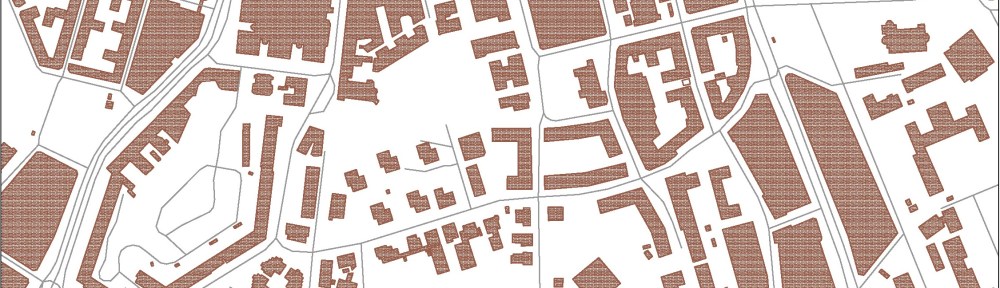
Episodes 166 to 170 stroll around the Vasa Park.
Episode 166: kv Häggen
District: Vasastaden
Photo date: 16 May 2021
Who designed Edvard Svensson’s imposing corner house at Aschebergsgatan 1? There is a discussion on page 189 in ”Vasastaden-Lorensberg”. Sedenmalm is rather dismissive of the ”small builders” who had worked their way up constructing landshövdingehus. The styles are variously Neo-Renaissance, as was popular at the time. The Old Gothenburg site also collates the entries about this block in that paper – quite handy. And CRA Fredberg offers lively vignettes about life and times in the general area.
Episode 167: kv Hasseln
District: Vasastaden
Photo date: 22 May 2021
When the old farm Brantdala, Steep Dale, had to give way to modern development in 1910, the area was planned by Albert Lilienberg. He put his mark on large parts of the then-city and although he was rather reviled by the following modernists, he has in later years become something of a celebrity, it seems. Books and articles mention him often.
As the area is very hilly, it had been too difficult to build on it until now, when dynamite made everything so much easier. The Domesticity house Föreningsgatan 32 was built in 1911, in a sort of Jugend / National Romanticism mix. Björner Hedlund designed it together with his father Hans. The northwest corner of the block was built a few years later and by that time fashions had shifted radically towards 1920s Classicism.
Episode 168: kv Högskolan and Vasaparken
District: Vasastaden (formerly Lorensberg)
Photo date: 27 February 2021
The old university building is listed but still in use, for representation and administrative offices. I’ve attended a couple of public lectures there, one by an adventurer who described his expedition to the Nazca geoglyphs. It was like being transported back in time a hundred years, when explorers toured the lecture circuits to finance their new expeditions! Amundsen, Hedin, Shackleton spring to mind.
The Vasa Park and its convoluted gestation is described in all my sources, a popular subject. Photos of small boys on sleds tobogganing down the steep terrain are obligatory.
Episode 169: kv Örebrohus
District: Vasastaden (formerly Lorensberg)
Photo date: 29 May 2021
The blocks around what became the Vasa Park were built around 1890 to 1900. The posh new inhabitants must have disliked the shanty town between them intensely. Likewise the other shanty town to the north, Flygarns Haga. Luckily, the authorities soon had them ”moved along” and the first wave of gentrification in Gothenburg was completed.
Örebrohus is Neo-Renaissance and Neo-Gothic rohbau, but the younger houses are starting to look at the interesting new style called Jugend.
Episode 170: kv Trollenäs
District: Vasastaden (formerly Lorensberg)
Photo date: 29 May 2021
Here is another block built and designed by firms that had started out making landshövdingehus. By now they had made enough money to spend on lavish decorations for their Neo-Renaissance and Neo-Gothic facades, as described on page 284 in ”Vasastaden-Lorensberg”.
Instead of brick and plaster, they could spend on limestone, granite and sandstone. Two members of SGU, the Swedish Geological Survey, recently wrote an excursion guide to the geology of Gothenburg cladding.
 Rockyramblings